

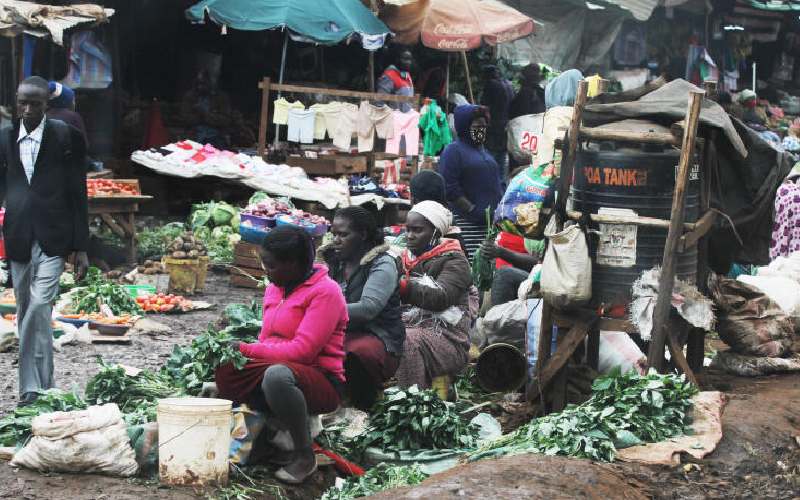
Nairobi, Kenya – Behind the noise of policy debates and economic reports, a quiet crisis is unfolding in Kenya’s estates and markets — one that is threatening to erase the livelihoods of mama mboga and thousands of informal hustlers.
With another fuel price increase expected, small traders say they are staring at a future where survival itself is no longer guaranteed.
For mama mboga, business has never been easy. But now, it is becoming impossible.
“I used to make something small at the end of the day,” says Mama Atieno, a vegetable vendor in Nairobi. “Now, I just rotate money. There is no profit left.”
Fuel prices sit at the heart of their struggle.
Every sack of vegetables transported from farms to markets depends on fuel. When fuel costs rise, transport becomes expensive. Suppliers hike prices. Traders are squeezed. Customers push back.
And in that chain, mama mboga are the weakest link.
“They blame us for high prices,” says one trader in Kayole. “But we are also suffering. We don’t control these costs.”
As prices rise, customers are buying less. Some are shifting to cheaper alternatives. Others are cutting down portions entirely.
The result is devastating.
Vegetables go unsold. Stock spoils. Losses pile up.
Across the informal economy, the pressure is just as intense.
Boda boda riders are struggling with fuel costs that eat into their earnings. Hawkers are facing reduced demand. Small kiosks are recording lower daily sales.
For many, the hustle is no longer sustainable.
“You can work the whole day and go home empty-handed,” says a vijana pushing a mkokoteni. “It feels like we are working just to survive, not to live.”
What makes the situation worse is the lack of cushioning for those at the bottom.
Unlike formal employees, informal traders have no safety nets. No fixed salaries. No guarantees.
When the economy shifts, they absorb the shock directly.
And this time, the shock may be too much.
Experts have long warned that fuel price increases hit the informal sector hardest, but on the ground, the reality is more brutal than statistics can capture.
It is visible in the tired faces at markets.
In the reduced portions on dinner tables.
In the quiet frustration of those who feel left behind.
For mama mboga, the fear is no longer about making profit.
It is about whether they will still have a business at all.
As the anticipated fuel hike looms, one truth is becoming painfully clear — Kenya’s smallest traders are being pushed closer to the edge.
And for many of them, there may be no way back.










Comments (0)
No comments yet. Be the first to comment!
Leave a Comment