

In many societies, power is not just held—it is protected. It is shielded by tradition, reinforced by fear, and often left unquestioned. Many learn, consciously or unconsciously, that challenging authority comes with consequences, and that silence is sometimes the safest path.
But every so often, a voice emerges that refuses to follow that script.
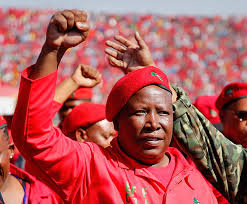
Julius Malema is one such voice.
His rise in South Africa’s political landscape has not been defined by quiet diplomacy or careful neutrality. Instead, it has been shaped by boldness, confrontation, and an unwavering willingness to question those in power—no matter how uncomfortable it may be.
From his early days in youth political movements, Malema demonstrated a trait that would later define his leadership: he was not afraid to speak. While others measured their words cautiously, he spoke with urgency. While others sought approval, he pursued conviction. It was not always popular, and it was rarely easy—but it was consistent.
Over time, that consistency turned into influence.
Malema’s political journey has been marked by moments that many would avoid. He has stood in spaces where power is concentrated—parliament, national platforms, public rallies—and asked questions that others hesitated to ask. He has challenged decisions, confronted leadership, and pushed debates into the open.
In doing so, he has redefined the role of opposition—not as a silent observer, but as an active force.
To his supporters, this is courage in its purest form. It is the willingness to stand firm even when the room is against you. It is the refusal to dilute a message for the sake of comfort. It is the belief that leadership should always be accountable, and that accountability begins with questioning.
To his critics, his approach can be seen as confrontational, even disruptive. His words have often sparked controversy, and his methods have at times divided opinion. Yet even within that division lies a deeper reality: challenging power is rarely neat, and it is almost never universally accepted.
Courage, by its nature, unsettles.
Across the African continent, particularly among young people, Malema’s story resonates beyond South Africa. It speaks to a shared experience—one where many feel that systems are distant, decisions are made without them, and voices are often overlooked.
In that context, his presence becomes symbolic.
He represents the possibility that one does not have to wait for permission to speak. That influence is not always granted—it can be asserted. That leadership is not only about holding office, but also about shaping conversations.
For young leaders in countries like Kenya, where the energy and ideas of youth are abundant yet often underrepresented, this message carries weight. It challenges a deeply held assumption: that change must come slowly, and only through established channels.
Malema’s journey suggests otherwise.
It suggests that change can begin with a voice—if that voice is used consistently and courageously.
Yet his story also offers an important lesson in balance. Speaking up is powerful, but it must be anchored in purpose. Challenging leadership is necessary, but it must aim toward building something better. Courage without direction can create noise; courage with vision can create transformation.
This is where true leadership lies.
Julius Malema’s path has not been without resistance. He has faced criticism, opposition, and moments of intense scrutiny. But perhaps that is the cost of refusing to remain silent in spaces that are accustomed to silence.
And perhaps that is the point.
Because in every society, progress begins when someone is willing to ask difficult questions—questions that others may fear, avoid, or postpone.
Malema has built his identity around asking those questions.
And in doing so, he has reminded a generation of something both simple and profound:
that power is not beyond challenge,
that leadership is not beyond accountability,
and that a single voice—used boldly—can shift the direction of a conversation, a community, and sometimes even a nation.
For those watching, the lesson is not to imitate his style, but to understand his principle.
Silence maintains the status quo.
Courage challenges it.
And in that space between silence and courage, the future of leadership is being shaped.

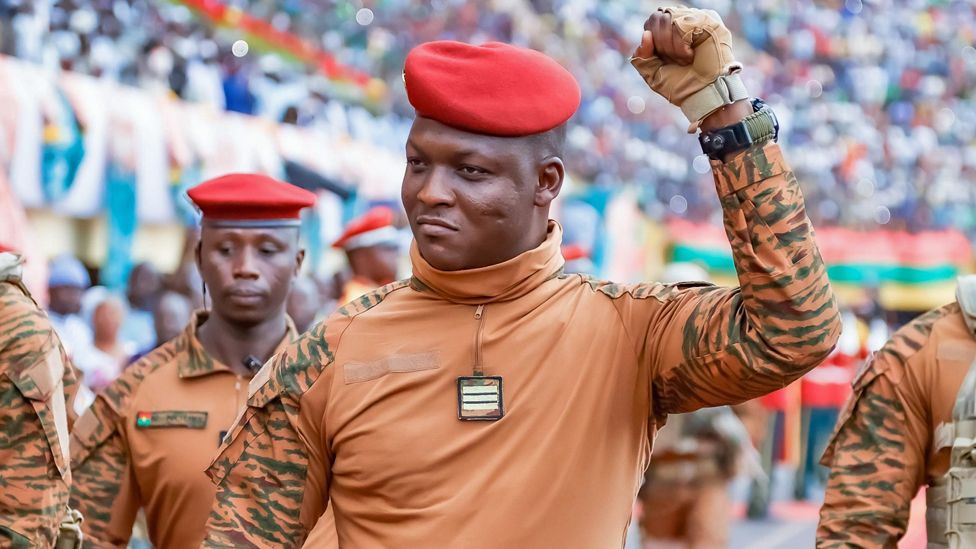
From Battlefield to Presidency: The Rise of Ibrahim Traoré and a New Wave of African Leadership








Comments (0)
No comments yet. Be the first to comment!
Leave a Comment