

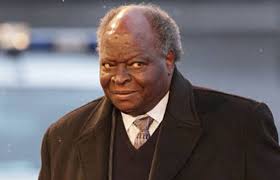
There was a time in Kenya when change did not shout—but you could feel it. You saw it in a child walking to school for the first time without being sent home for fees. You felt it when a bulb flickered to life in a rural home that had only known darkness. You experienced it on roads that suddenly made journeys shorter, safer, and possible. There were no daily reminders, no constant speeches—just quiet transformation unfolding across the country. That era, deeply felt in the lives of millions, is closely tied to Mwai Kibaki.
Today, however, leadership has taken on a different character—more visible, more vocal, and more immediate. It is defined by constant communication, continuous public engagement, and an almost permanent political presence across multiple platforms. This shift has introduced a fundamental question into Kenya’s political discourse: what truly defines effective leadership—visibility or impact?
Kibaki’s leadership was grounded in a philosophy that now appears increasingly rare—results over rhetoric. He did not dominate the media cycle or seek to occupy every public space. Instead, he focused on building systems designed to outlast his presidency. His approach was less about being seen and more about ensuring that tangible change reached the lives of ordinary citizens.
During his tenure, several key transformations reshaped the country:
- Free Primary Education, which opened classroom doors to millions of children
- Rural electrification, bringing light and economic opportunity to previously underserved areas
- Infrastructure development, including the Thika Superhighway, which transformed mobility and connectivity
- Expansion of universities and national schools, widening access to education across the country
These were not symbolic gestures or short-term political wins. They were structural changes—deep, lasting interventions that altered the trajectory of a nation. Kibaki governed much like an architect, quietly laying foundations that, while not always visible in the moment, would prove essential over time.
In contrast, modern leadership operates within a rapidly evolving environment shaped by social media, 24-hour news cycles, and a public that expects immediate responses. Today’s leaders are required to be constantly present—both online and offline—responding to issues as they arise, communicating frequently, and shaping narratives in real time.
This has given rise to a leadership style that places a strong emphasis on visibility, engagement, and perception management. Leadership, in this context, often resembles a live broadcast—always active, always responding, and always under public scrutiny.
The contrast between these two approaches can be understood through a simple analogy. Kibaki’s leadership was like planting a tree. It required patience, consistency, and time before results became visible. But once established, it provided shade, stability, and long-term value.
Modern leadership, on the other hand, often resembles lighting a fire. It captures attention quickly, generates immediate visibility, and creates energy in the moment. Yet without careful management, it can fade just as quickly—or burn out altogether.
Both approaches have their place. However, only one consistently guarantees enduring impact.
Ultimately, leadership is not measured by moments, but by legacy. Kibaki’s legacy is not defined by how often he spoke, but by what continues to exist long after his tenure—schools filled with students, roads serving millions, and systems that remain functional years later. It is a legacy grounded in tangible, lived change.
Modern leadership, while effective in mobilizing people and shaping public narratives, faces a different challenge: ensuring that visibility translates into substance. Without meaningful results, even the most visible leadership risks becoming temporary influence rather than lasting transformation.
One of the most defining qualities of Kibaki’s leadership was restraint. He understood that leadership is not about reacting to every moment, but about focusing on what matters most. In today’s fast-paced environment, such restraint is increasingly difficult to maintain. The pressure to respond, to remain visible, and to stay relevant can lead to overexposure without depth.
Kibaki’s example offers a different perspective. It suggests that sometimes, the most powerful statement a leader can make is not through words, but through consistent, measurable delivery.
In the end, the debate between visibility and impact remains open. But the legacy of Kibaki provides a compelling argument—that leadership, at its core, is not about how often it is seen, but about how deeply it is felt.



From Battlefield to Presidency: The Rise of Ibrahim Traoré and a New Wave of African Leadership











Comments (0)
No comments yet. Be the first to comment!
Leave a Comment