

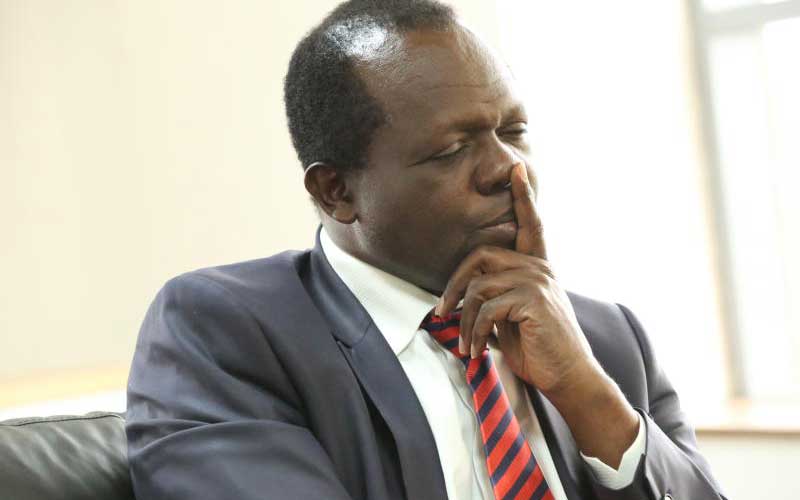
The recent eviction of veteran politician Raphael Tuju by auctioneers has stirred widespread public discussion, not only about politics and wealth, but also about the silent dangers of debt and financial overconfidence.
Tuju, a once powerful figure in Kenya’s political corridors and former Secretary General of the Jubilee Party, has long been associated with influence, high-level connections, and business interests. Yet the dramatic turn of events—where auctioneers reportedly moved to enforce debt recovery—has become a sobering reminder that financial obligations spare no one.
For many Kenyans watching the unfolding developments, the story goes beyond one politician. It highlights a deeper lesson about borrowing, financial discipline, and the risks of living beyond one’s means.
Across the country, thousands of individuals and businesses are trapped in cycles of loans—from banks, digital lenders, and informal credit groups. While credit can be a powerful tool for investment and growth, experts warn that irresponsible borrowing without sustainable repayment plans often leads to devastating consequences.
In Tuju’s case, the spectacle of auctioneers arriving at a prominent political figure’s property has ignited debate about how easily loans can spiral into legal battles and asset seizures.
Financial analysts say many borrowers make a common mistake: assuming that future income, political influence, or social status will somehow shield them from debt recovery.
But the reality is different.
Once loans default and courts authorize recovery processes, lenders can legally pursue property attachment, auctions, or eviction to recover their money.
The lesson is particularly important in a time when quick digital loans and aggressive lending platforms have made borrowing easier than ever before.
“Debt is not the problem,” one Nairobi-based financial consultant told Fendo News. “The real danger is taking loans without a clear repayment strategy.”
For ordinary citizens, the unfolding situation serves as a powerful reminder that financial discipline matters regardless of status. Wealth, power, and public office may command respect, but they cannot erase contractual obligations.
As the story continues to unfold, the broader message remains clear: borrowing responsibly, living within one’s financial capacity, and managing debt carefully are not just financial principles.
They are survival strategies in an increasingly credit-driven economy.
And if there is one takeaway from the Tuju saga, it may simply be this: loans are easy to take—but much harder to escape when things go wrong.





From Battlefield to Presidency: The Rise of Ibrahim Traoré and a New Wave of African Leadership













Comments (0)
No comments yet. Be the first to comment!
Leave a Comment